
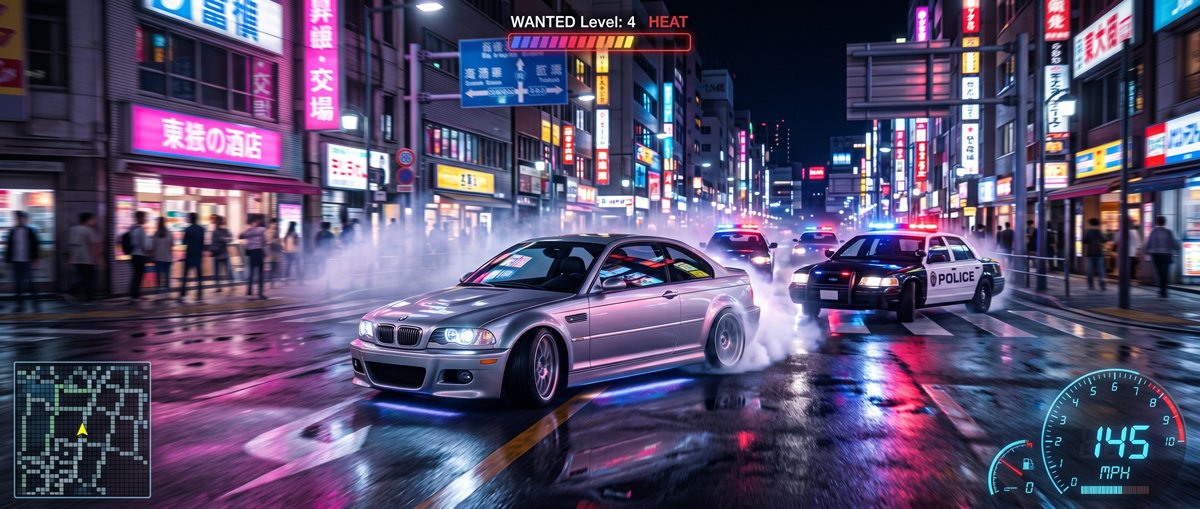

The early 2000s were a golden age for gaming. Consoles became more powerful, internet cafés were packed with excited players, and racing games dominated childhood entertainment. Among all those unforgettable titles, one game stood above the rest for millions of gamers — Need for Speed Most Wanted.
For countless players, this wasn’t just another racing game. It became a memory, a lifestyle, and a defining part of growing up. The thrill of escaping police cars, defeating blacklist rivals, customizing dream vehicles, and hearing engines roar through Rockport City created experiences that stayed with us forever.
When gamers talk about titles that shaped their childhood, Need for Speed Most Wanted (2005) almost always enters the conversation. It wasn’t simply about driving fast cars. It was about freedom, ambition, rivalry, adrenaline, and unforgettable emotions.
Every pursuit felt personal.
Every victory felt earned.
Every race felt cinematic.
This article dives deep into why this legendary game became such an unforgettable part of childhood for an entire generation.
The Era When Racing Games Ruled Gaming Culture
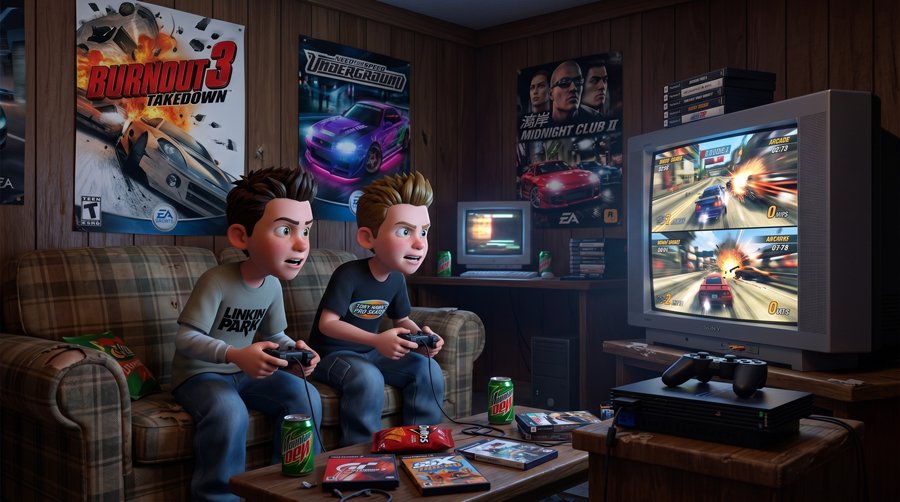
The gaming landscape during the early 2000s was completely different from today. Online multiplayer was still evolving, smartphones didn’t dominate attention spans, and players spent hours mastering single-player games.
During that era, racing games were everywhere.
They offered instant excitement unlike strategy games or RPGs that demanded long tutorials and patience. You could start a race within seconds and immediately experience speed, chaos, and competition.
Games like:
- Need for Speed Underground
- Burnout 3: Takedown
- Midnight Club 3: DUB Edition
helped define an entire gaming generation.
But Need for Speed: Most Wanted elevated the formula to another level.
Why Arcade Racing Felt Magical
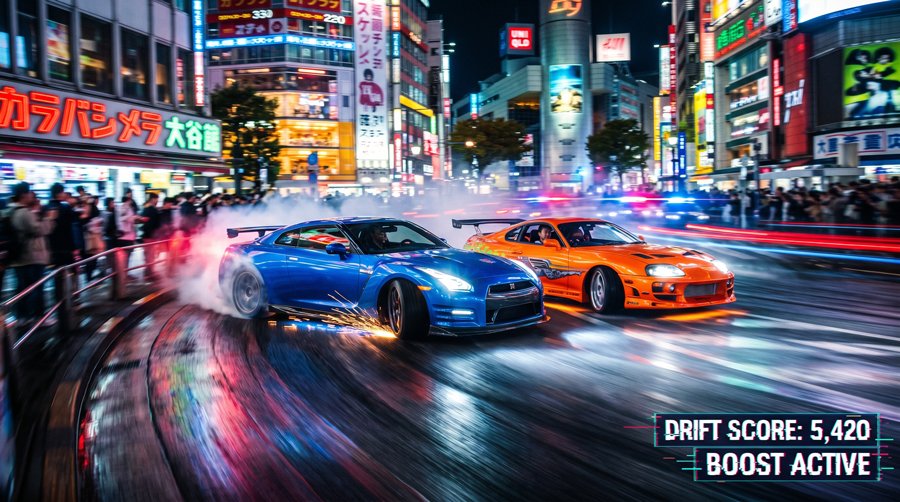
Arcade racing games weren’t obsessed with realism. They cared about one thing:
FUN
Players could drift through impossible corners, survive outrageous crashes, and launch into dramatic pursuits without worrying about realistic simulation mechanics.
That exaggerated excitement created unforgettable gaming sessions.
As children, we felt powerful behind the virtual steering wheel. Every race felt like an action movie where we were the main character.
Need for Speed Most Wanted perfected the balance between realism and arcade action. Cars looked believable, but gameplay remained fast, exciting, and accessible to everyone.
The Rise of Street Racing Games
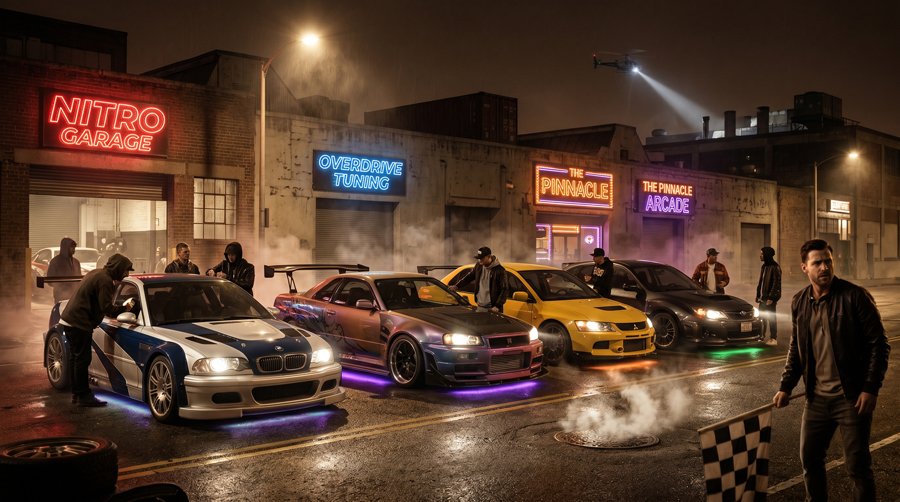
Street racing culture exploded during the early 2000s thanks to movies like The Fast and the Furious.
Suddenly:
- Nitrous boosts were cool
- Neon lights were everywhere
- Car customization became mainstream
- Underground racing felt rebellious and exciting
Need for Speed Most Wanted captured that cultural moment perfectly.
The game made players feel like underground racers fighting for reputation and respect while challenging authority in the streets of Rockport City.
First Encounter With Need for Speed Most Wanted
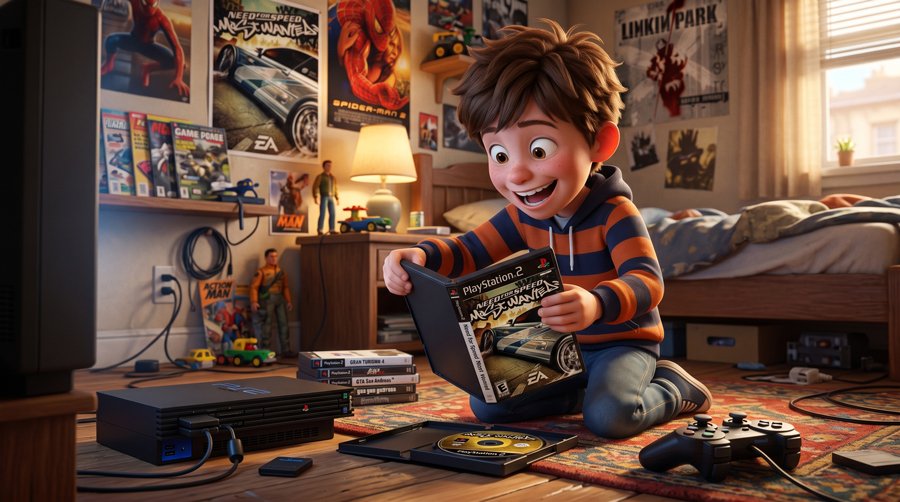
Every gamer remembers the first time they launched this masterpiece.
The opening cinematic instantly felt different. It had:
- Energy
- Personality
- Style
- Attitude
The combination of fast editing, rock music, and cinematic storytelling made an unforgettable first impression.
Installing the Game for the First Time
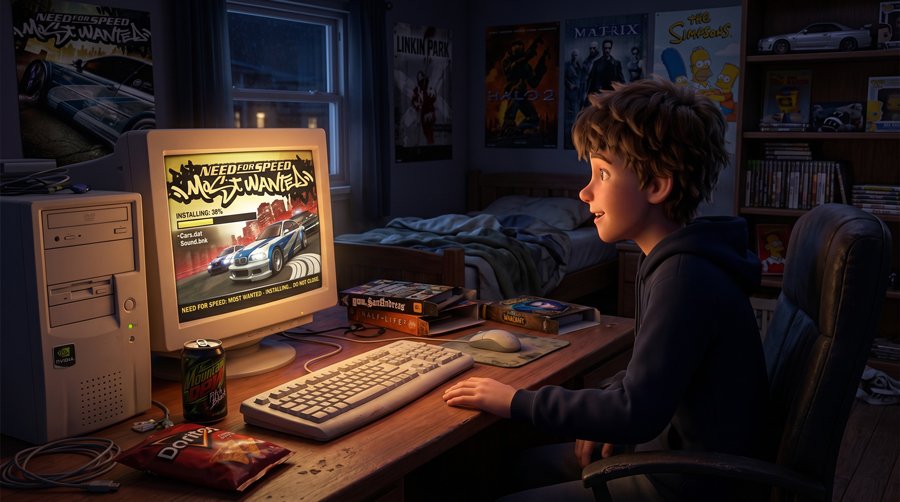
Whether it was on:
- PlayStation 2
- Xbox
- PC
- GameCube
players waited impatiently to enter the world of Rockport.
There was genuine excitement in hearing the intro music and seeing the menu animations for the first time. Those small moments created emotional memories that modern instant-download gaming rarely replicates.
Today, games install in minutes digitally.
Back then, the anticipation itself became part of the experience.
The Iconic BMW M3 GTR Introduction
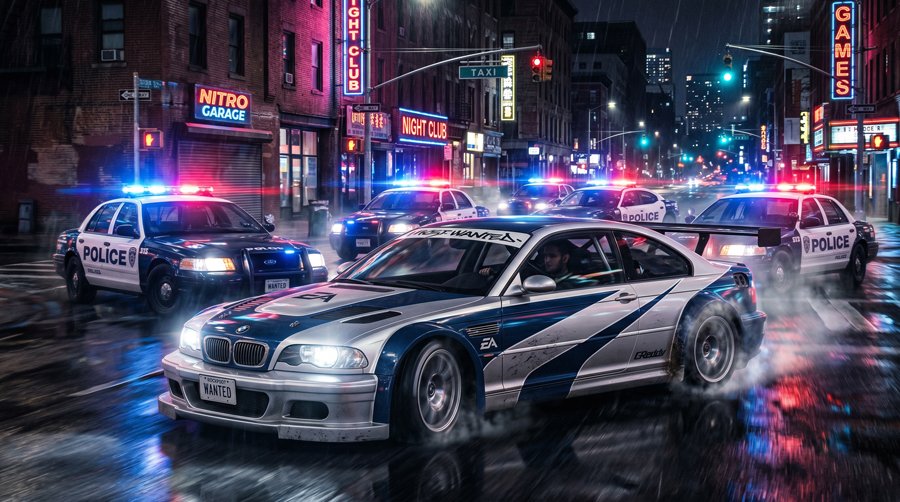
The BMW M3 GTR became one of the most iconic cars in gaming history.
Its silver-and-blue livery instantly became legendary.
The opening race against Razor created emotional investment immediately. Losing the car felt personal and reclaiming it became the ultimate goal throughout the story.
Even today, many gamers instantly associate the BMW M3 GTR with childhood nostalgia. Few gaming vehicles have ever achieved that level of cultural impactraces.
Why Need for Speed Most Wanted Was Different
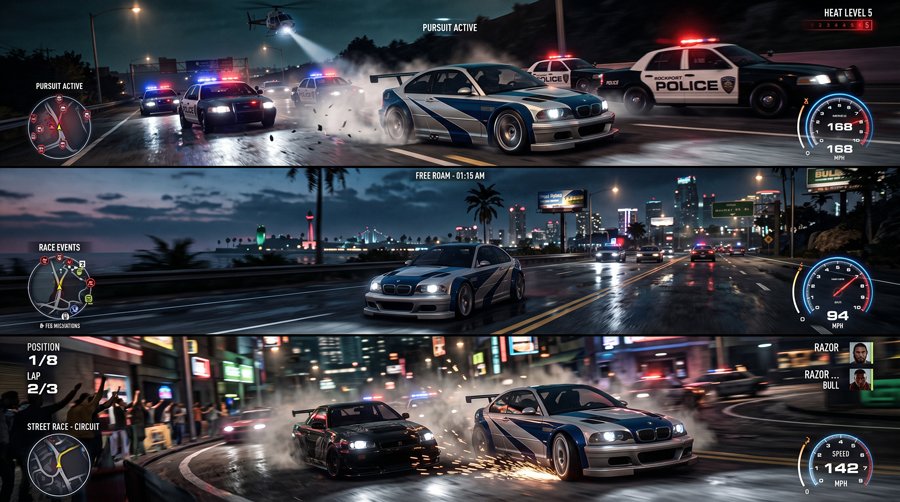
Many racing games existed during that era, but Most Wanted offered something unique.
It combined:
- Open-world exploration
- Story-driven progression
- Police pursuits
- Car customization
- Competitive rival systems
This mixture created a complete experience rather than just a collection of races.
Open World Freedom
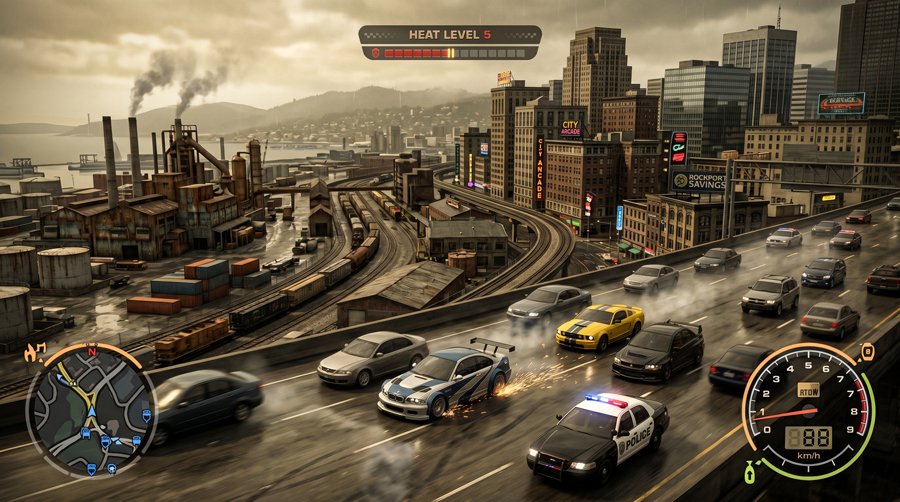
A sprawling fictional city inspired by Rockport with highways, industrial zones, downtown streets, and sports cars speeding through traffic.
Rockport City felt alive.
Players could:
- Freely explore highways
- Discover shortcuts
- Trigger police pursuits
- Drive around aimlessly for fun
That freedom created immersion rarely seen in racing games at the time.
Sometimes the best moments weren’t races at all. They were random police pursuits lasting twenty minutes because players refused to get caught.
That unpredictability made every gaming session memorable.
Police Chases That Felt Real
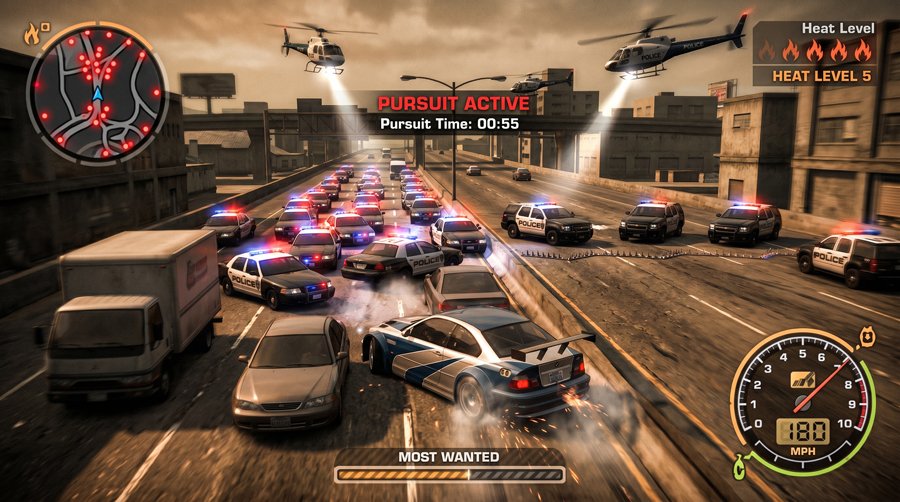
Police chases became the heart of the experience.
The escalating heat system created tension unlike anything else in racing games.
As the heat level increased:
- Helicopters appeared
- Spike strips blocked roads
- SUVs rammed aggressively
- Massive roadblocks trapped players
Escaping after a long pursuit felt incredibly satisfying.
The adrenaline was unmatched.
Even modern racing games struggle to recreate the same intensity and emotional excitement.
The Legendary Blacklist Rivals
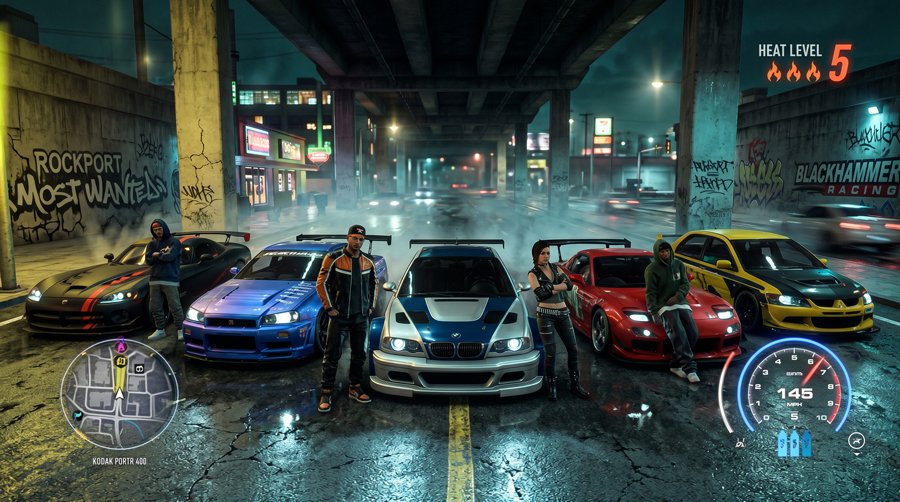
The Blacklist system gave players a clear progression path.
Every rival had:
- Personality
- Reputation
- Unique cars
- Distinct racing styles
Climbing the rankings felt meaningful because each victory pushed players closer to Razor.
Razor and the Ultimate Revenge Story
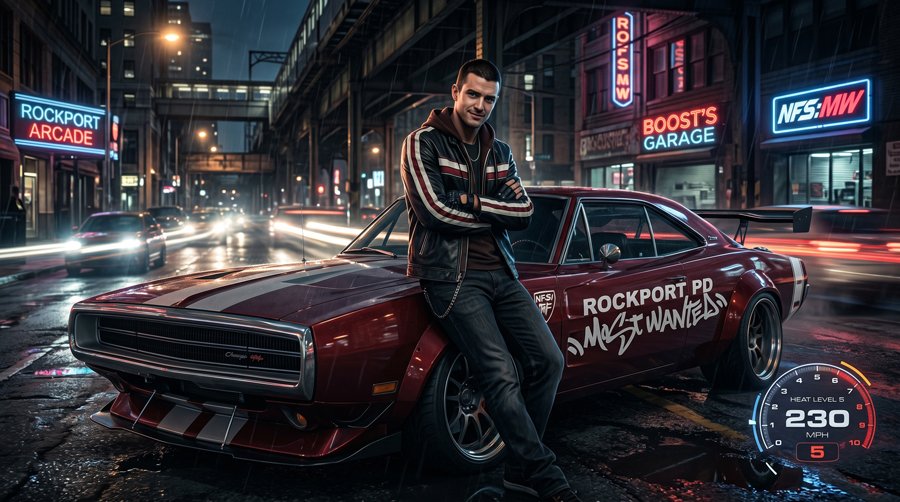
Clarence ‘Razor’ Callahan wasn’t just another villain.
He cheated players out of their car and constantly mocked them throughout the game.
That betrayal created emotional motivation.
Players didn’t simply want to win races.
They wanted revenge.
That simple but effective storytelling made progression addictive and memorable.
Defeating Every Blacklist Racer
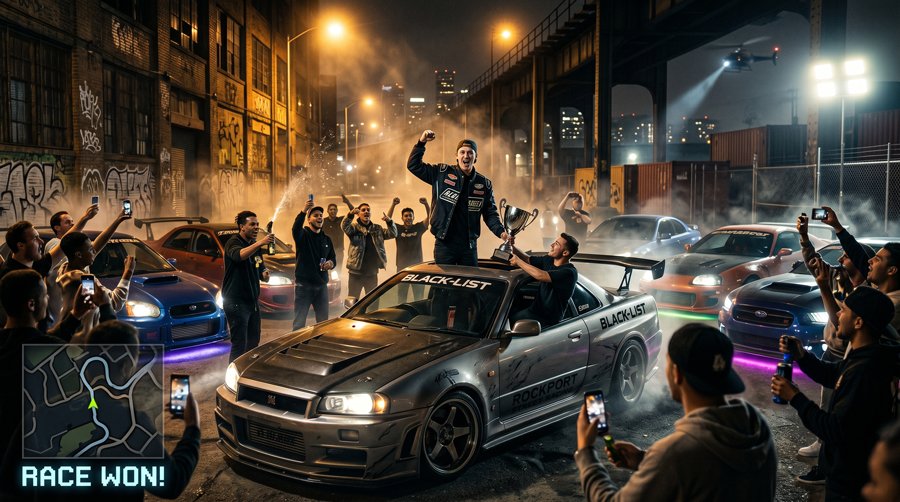
Each blacklist victory felt rewarding because players had to:
- Earn reputation points
- Complete milestone challenges
- Survive police pursuits
- Win difficult races
The journey required patience, skill, and persistence.
By the time players reached the top ranks, they genuinely felt like elite street racers.
The Soundtrack That Defined an Entire Generation
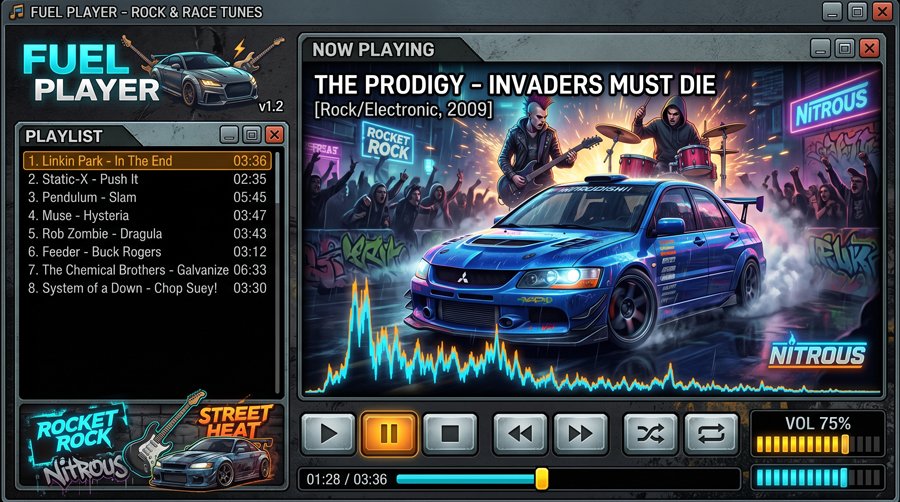
Music played a massive role in the game’s emotional impact.
Songs from artists like:
- Avenged Sevenfold
- Styles of Beyond
- Disturbed
became permanently linked to racing memories. The soundtrack created energy during races and emotional intensity during pursuits.
Songs That Still Trigger Memories
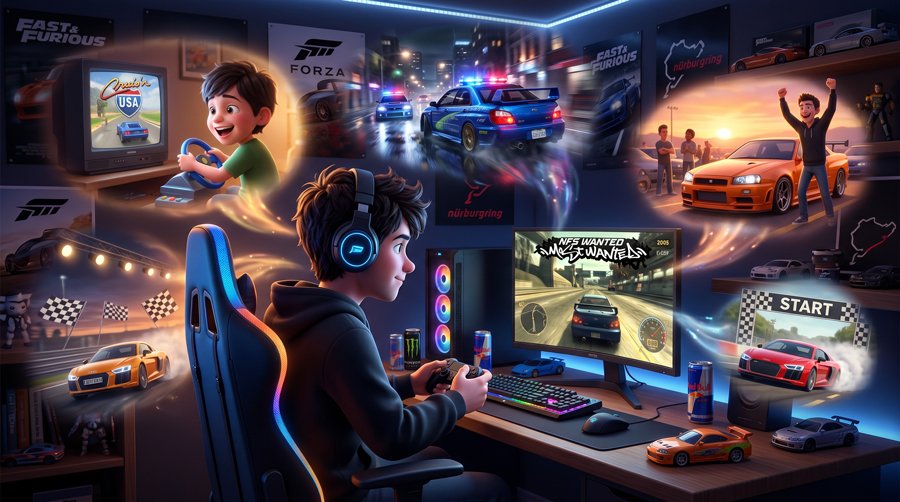
Hearing certain songs instantly transports players back to:
- Childhood bedrooms
- Late-night gaming sessions
- Weekend marathons
- School vacations
That emotional connection proves how powerful video game soundtracks can become.
Even years later, many fans still listen to the soundtrack during workouts, road trips, or gaming sessions.
Customization and Car Culture
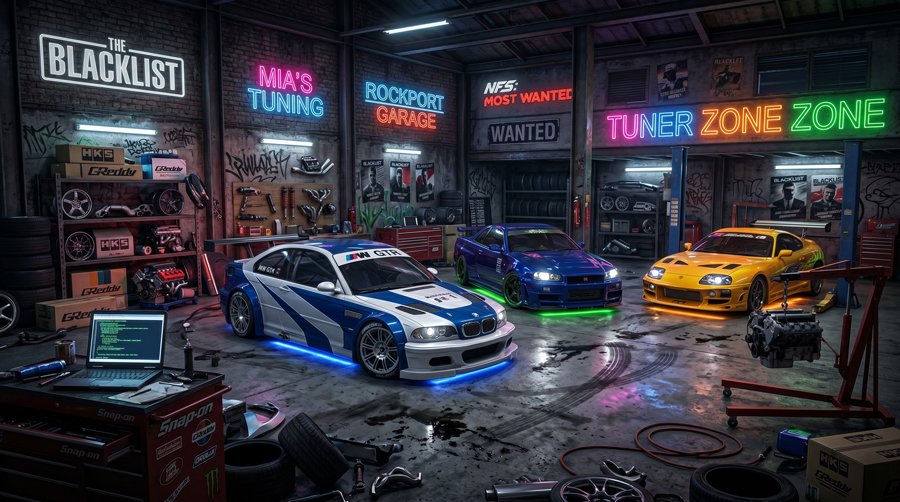
Customization made every car feel personal.
Players spent hours changing:
- Paint colors
- Vinyl decals
- Spoilers
- Rims
- Performance upgrades
For many children, this was their first exposure to real-world car culture.
Building Dream Cars
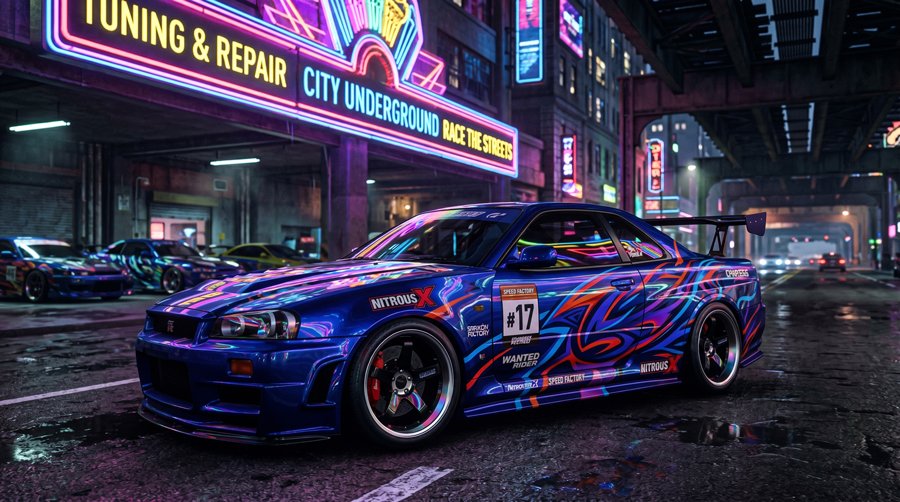
The game allowed players to create fantasy vehicles that reflected their personality.
Some players built aggressive racing monsters.
Others created flashy neon-filled street machines.
That freedom of expression made every garage unique.
Need for Speed Most Wanted transformed ordinary players into lifelong car enthusiasts.
Couch Gaming and Childhood Friendships
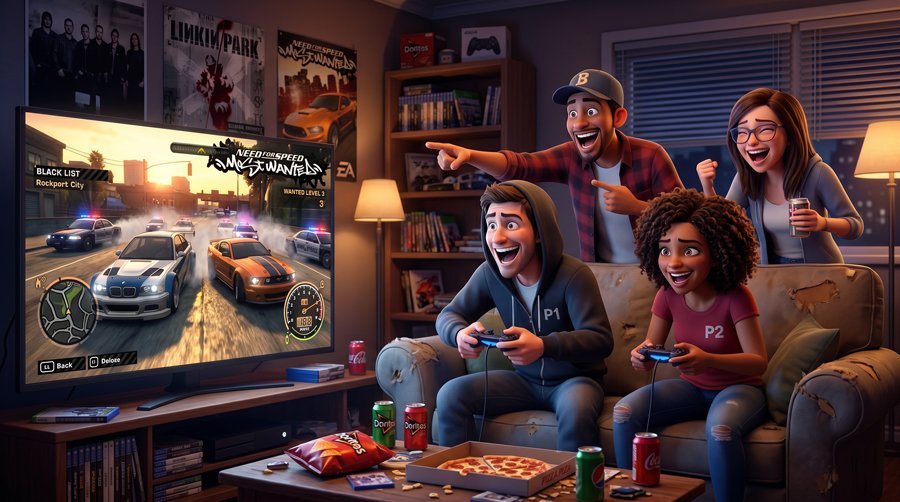
Gaming during childhood was deeply social.
Friends visited each other’s houses to:
- Compare progress
- Share cheats and shortcuts
- Compete for records
- Watch intense police chases
Those moments created unforgettable friendships.
Competing With Friends for Respect
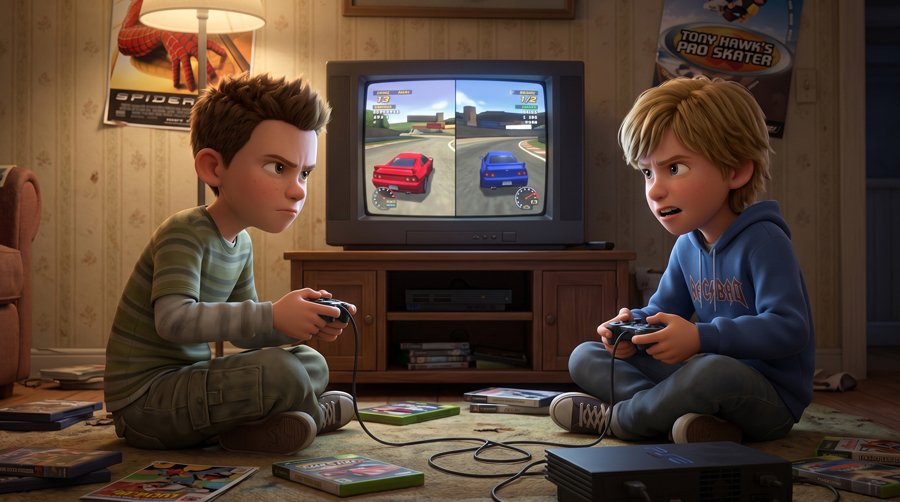
Bragging rights mattered.
Questions like:
- “Who has the fastest car?”
- “Who escaped Heat Level 5?”
- “Who beat Razor first?”
became school conversations and childhood memories.
Gaming wasn’t just entertainment.
It became part of personal identity and friendship culture.
Graphics That Once Looked Realistic
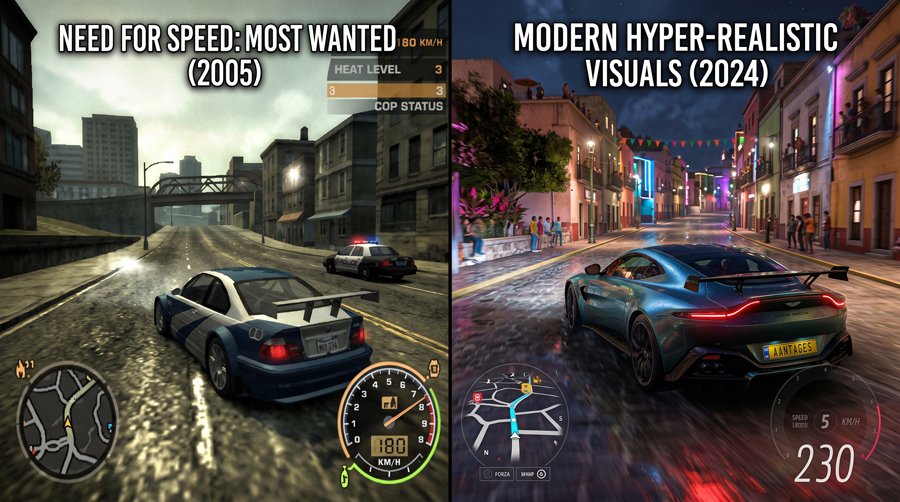
At the time, the graphics looked absolutely incredible.
The:
- Lighting
- Motion blur
- Reflections
- Cinematic effects
felt groundbreaking.
Looking back today reveals technical limitations, but nostalgia preserves those original feelings of amazement.
And honestly, that emotional memory matters more than graphical realism.
Lessons the Game Taught Beyond Racing
Surprisingly, the game taught valuable life lessons.
Players learned:
- Patience
- Persistence
- Strategy
- Focus
through repeated gameplay challenges.
Learning Patience Through Challenges
Some races were brutally difficult.
Police pursuits could end disastrously after thirty minutes of progress. One mistake could ruin everything.
But players kept trying.
That constant cycle of failure and improvement taught resilience in a surprisingly meaningful way.
Winning after repeated failures felt genuinely rewarding.
Why Modern Racing Games Feel Different
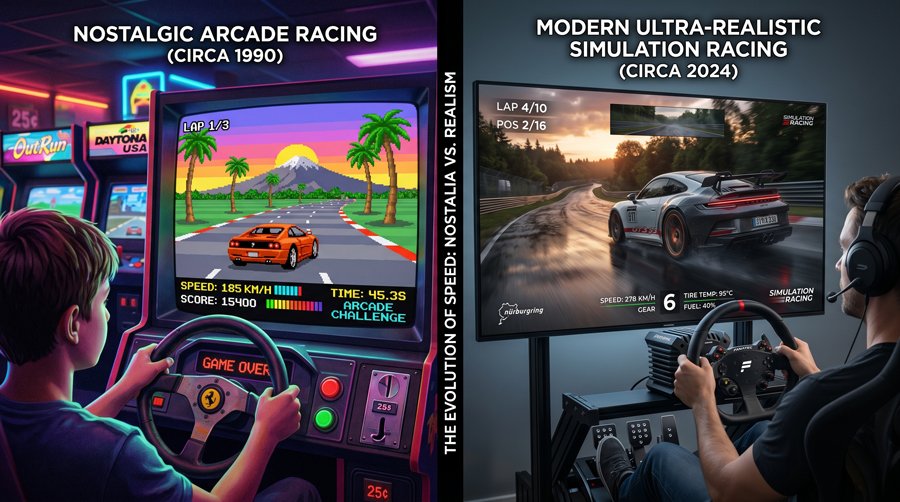
Modern racing games are technically impressive, but many players feel something is missing.
Maybe it’s:
- The simplicity of childhood
- The personality of older games
- The emotional attachment
- The arcade-style excitement
Whatever the reason, Most Wanted still feels special.
Nostalgia vs Modern Realism
Need for Speed Most Wanted succeeded because it balanced realism with fun.
It never became overly complicated.
The game focused entirely on:
- Excitement
- Style
- Adrenaline
- Emotional progression
That philosophy helped it become timeless.
The Lasting Legacy of Need for Speed Most Wanted
Fans continue creating:
- Mods
- HD texture packs
- Remasters
- Tribute videos
- Nostalgic retrospectives
Gaming communities still discuss:
- Favorite blacklist racers
- Best cars
- Hardest pursuits
- Most memorable moments
The legacy continues because the emotions were real.
You can learn more about the franchise on Electronic Arts Official Website
FAQs About Need for Speed Most Wanted
1. Why is Need for Speed Most Wanted so nostalgic?
The game combined:
- Emotional storytelling
- Memorable music
- Intense gameplay
- Childhood memories
into one unforgettable experience.
That emotional combination created deep nostalgia for an entire generation.
2. Which version of Need for Speed Most Wanted is the best?
Most fans consider the 2005 version the definitive classic because of:
- The blacklist system
- Police pursuits
- Story progression
Iconic atmosphere
3. Why was the BMW M3 GTR so iconic?
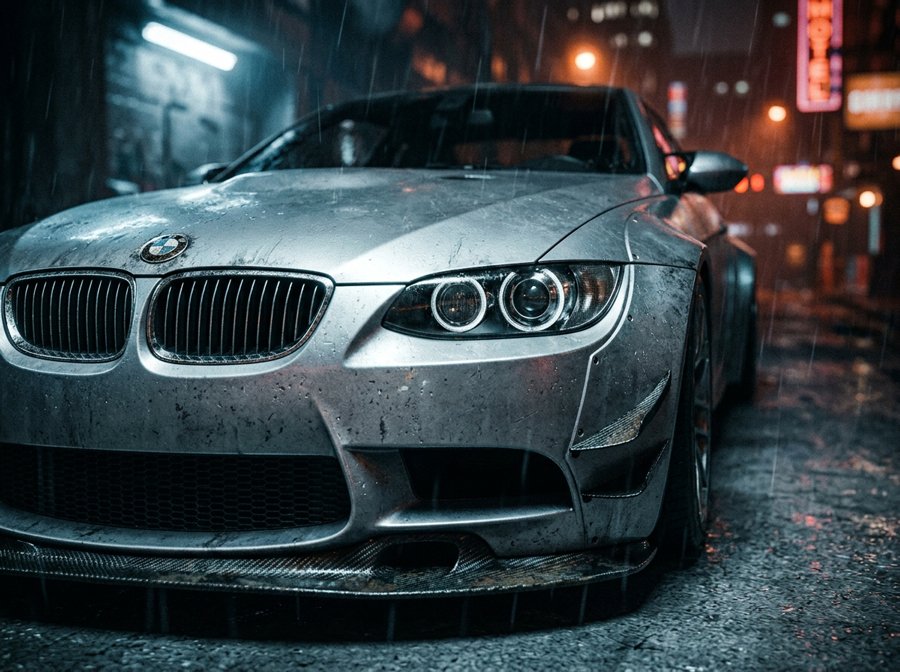
Its design, role in the story, and emotional significance made it one of gaming’s most legendary cars.
The car became a symbol of revenge, ambition, and nostalgia.
4. Can you still play Need for Speed Most Wanted today?
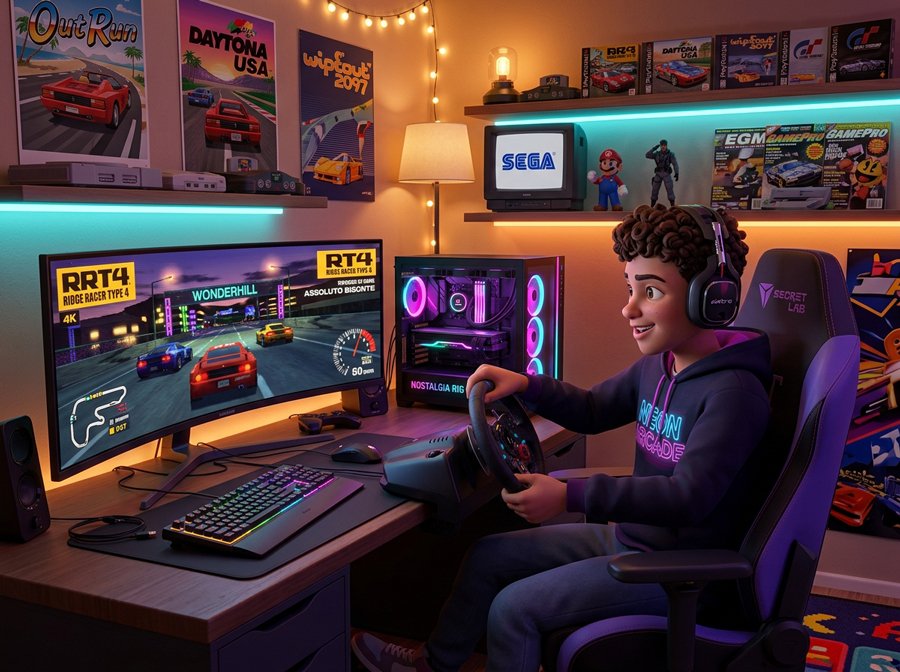
Yes. Many players still enjoy it through:
- Older consoles
- PC installations
- Emulators
- Fan-made mods
Its community remains active even today.
5. What made the police chases special?
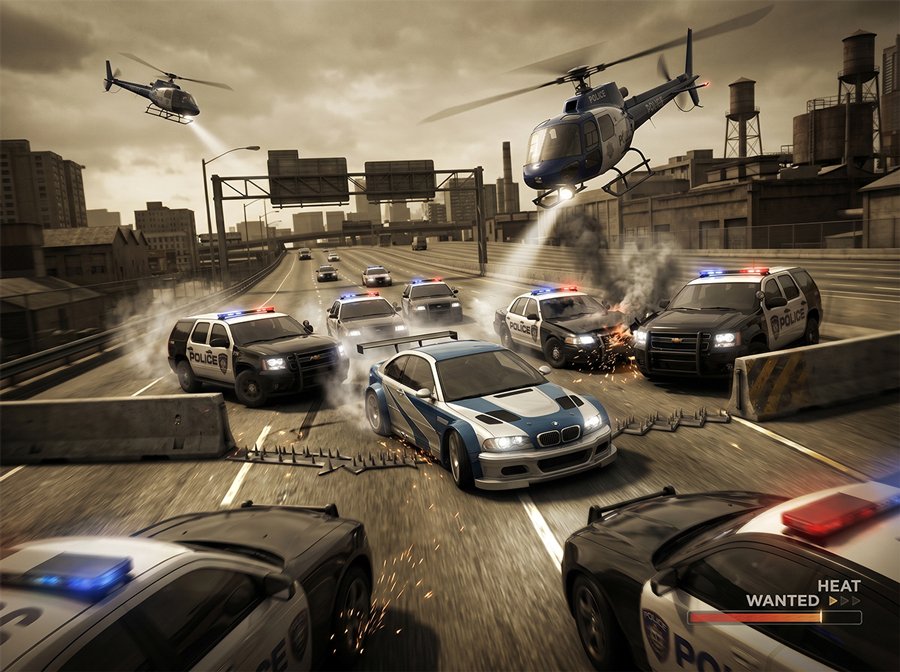
The escalating intensity created cinematic gameplay that felt unpredictable and exciting. Each pursuit became a personal survival story.
6. Did Need for Speed Most Wanted influence later racing games?
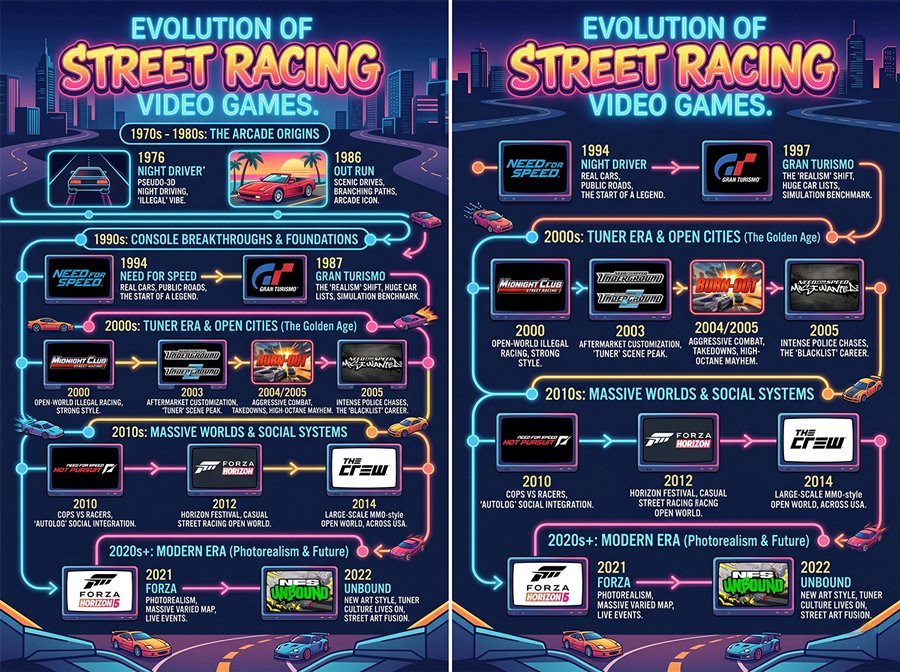
Absolutely.
Many modern racing games borrowed elements such as:
- Open-world driving
- Police systems
- Rival progression
- Arcade-style pursuits
Its influence on the racing genre remains massive.
Conclusion
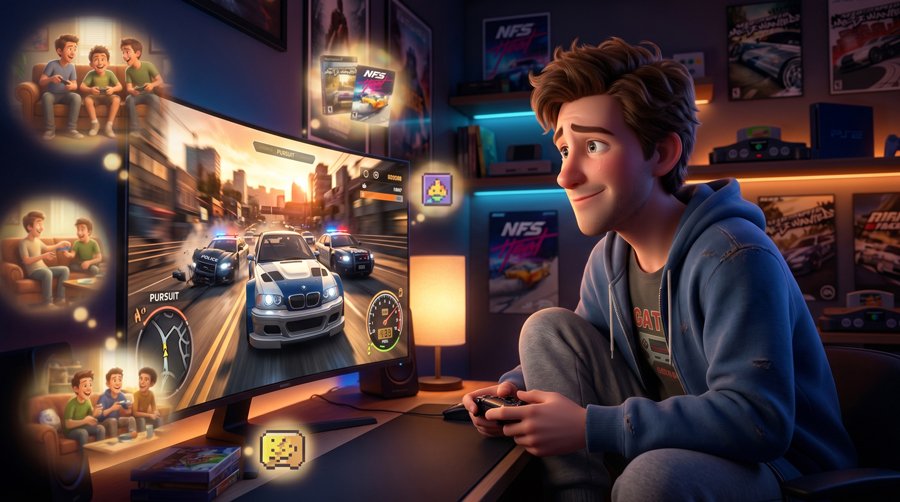
How Need for Speed Most Wanted Defined My Childhood is more than a story about a racing game.
It’s a reflection on growing up during one of gaming’s most magical eras.
The game gave players unforgettable moments filled with:
- Excitement
- Competition
- Friendship
- Freedom
- Adrenaline
It wasn’t merely entertainment.
It became part of childhood identity.
Even years later, hearing the soundtrack, seeing the BMW M3 GTR, or remembering a chaotic police chase can instantly revive old emotions.
And that’s the mark of a truly legendary game.